Design strategy Research Interaction design Visual design Prototyping Design library
Overview
Pricing is what traders care about the most. Around 2017, the commodity market started to show a trend that users were choosing other competitors over Goldman Sachs. The mission was to win users back and grow the commodity digital trading business. I was brought on as a design lead to manage this effort - finding the cause, creating a user-driven design process, and grow monthly active users.
Problem
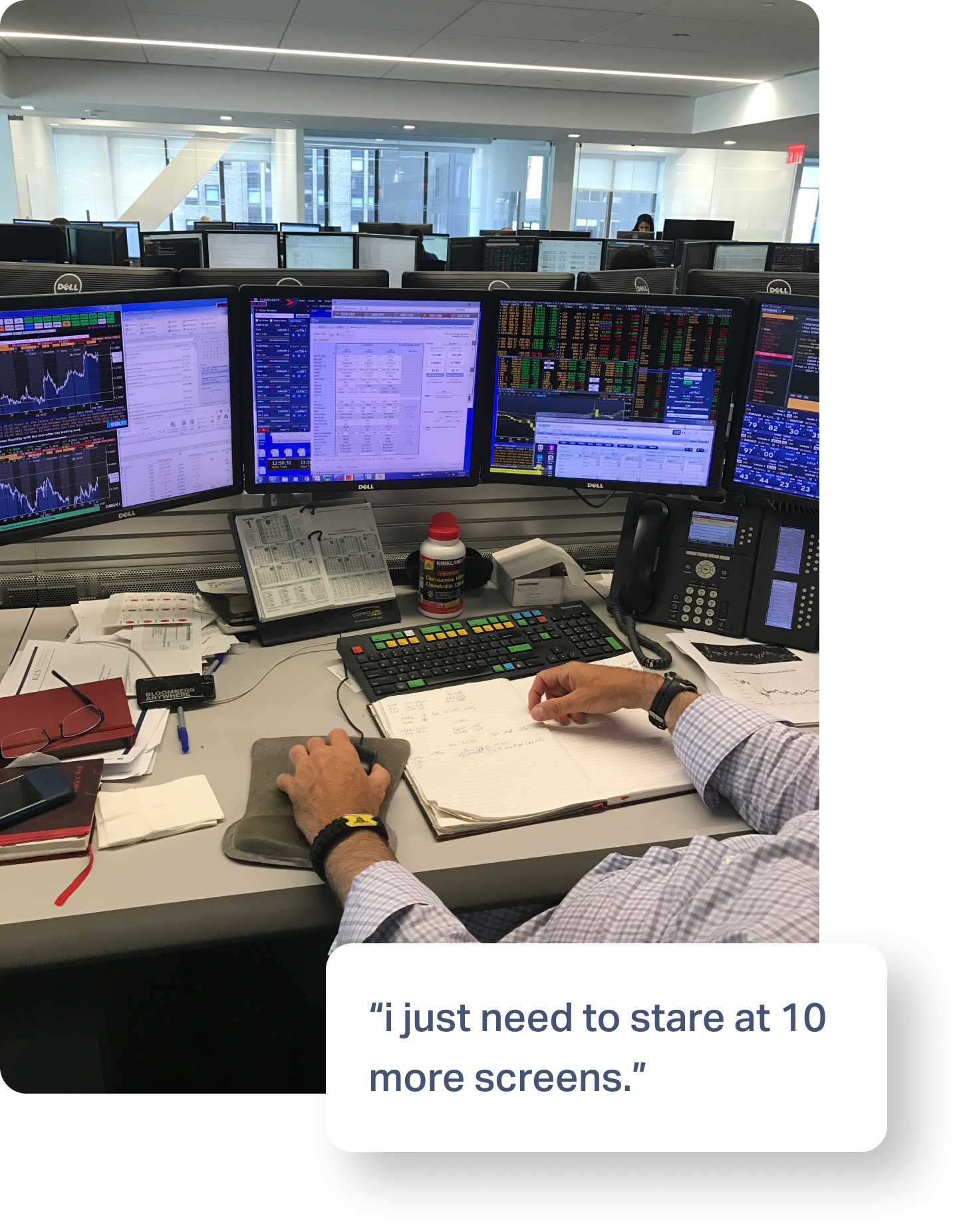
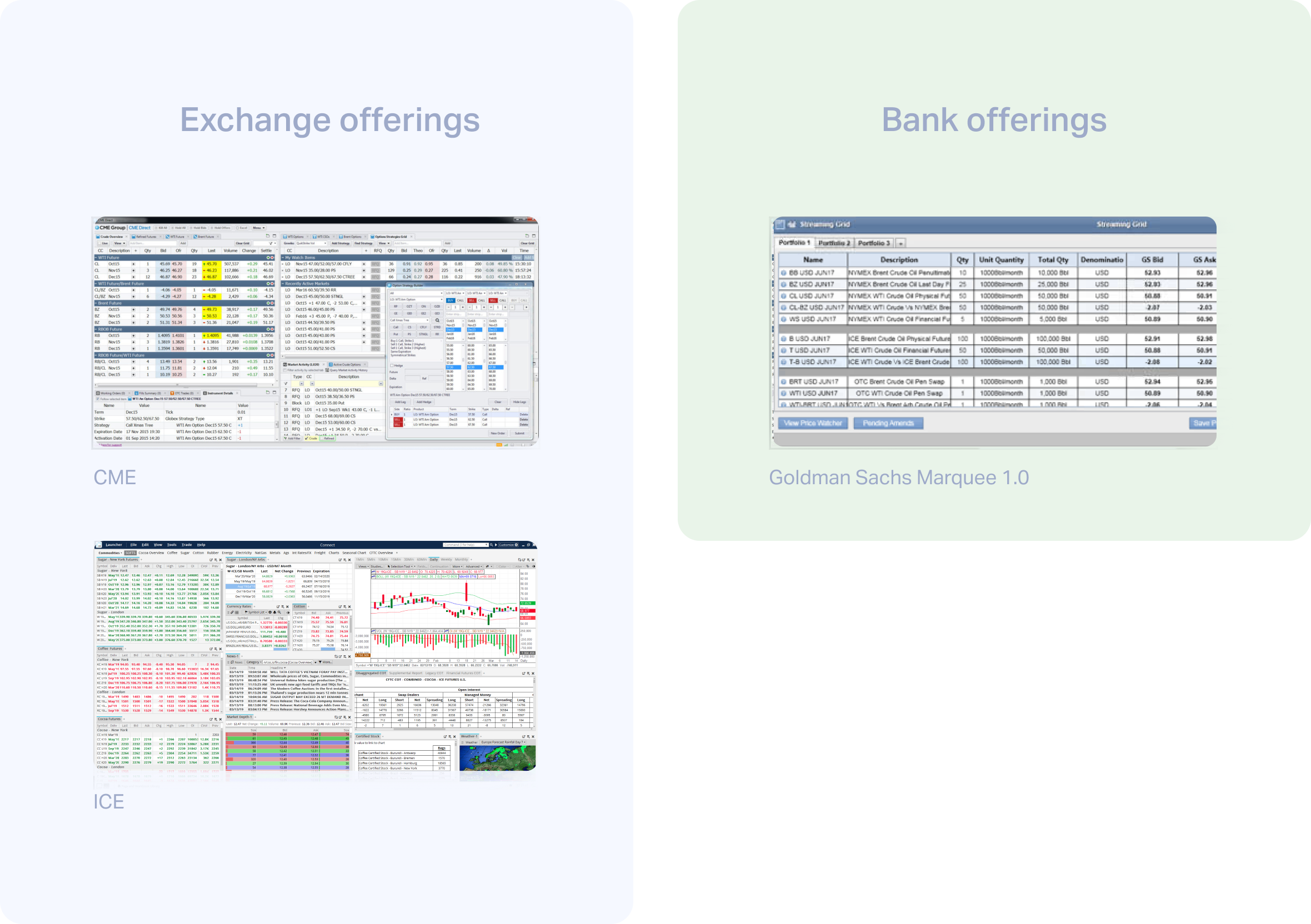
In order to understand the reason behind declined active user base, I launched a series of user research sessions that included talking to users, shadowing users onsite, and interviewing our sales team.The insights I captured were users have to pay attention to multiple pricing screens from different organizations.
Goldman Sachs' offering lacked price transparency, so they chose to use other advanced platforms.
user base
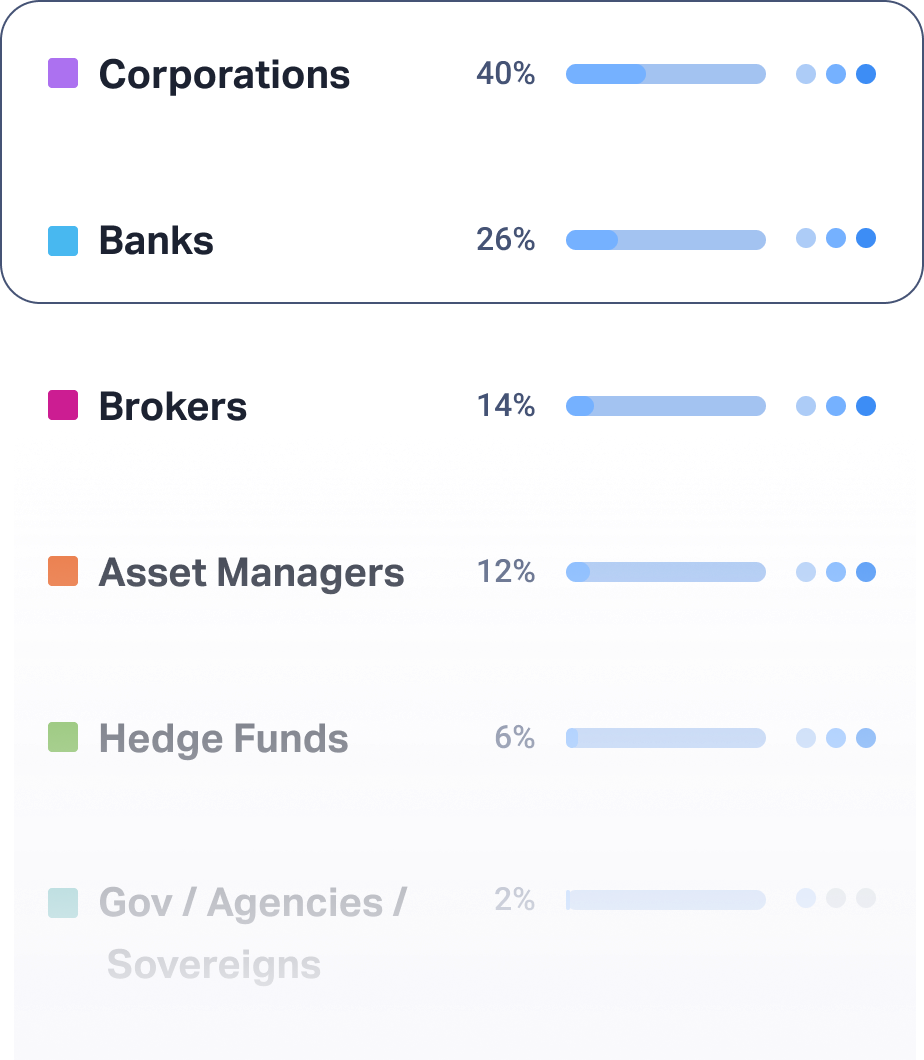
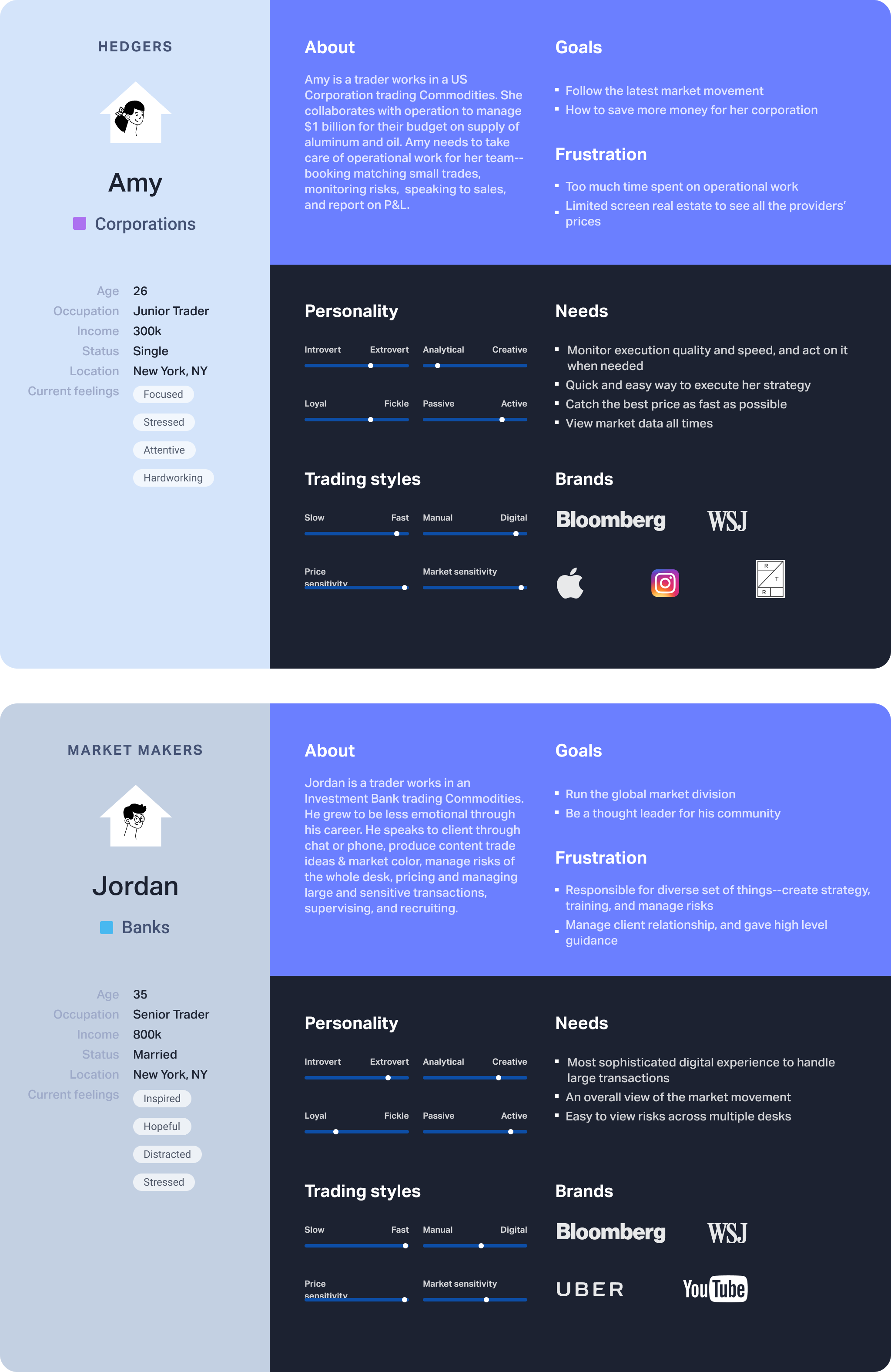
Before jumping into the problem areas, I decided to look deeper into users' segmentation, personas and needs.
Based on the metrics, corporations and banks are 66% of the total user base, I started to focus on these two user types.
Objective
A product helps users to understand market trends easily and have a better chance to get the best price
1. Create greater market visibility 2. Integrate data with partners 3. Intuitive and efficient workflow
Process
Align goals
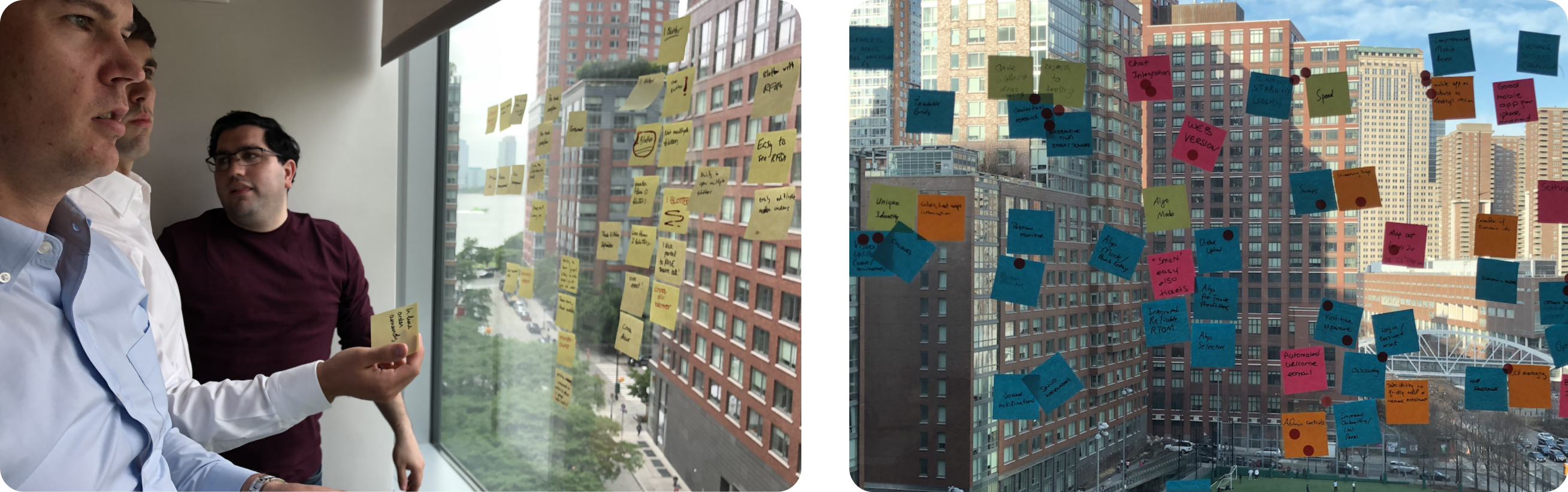
Workshop with the team and business leaders
Strategies
What if create a centralized price center?
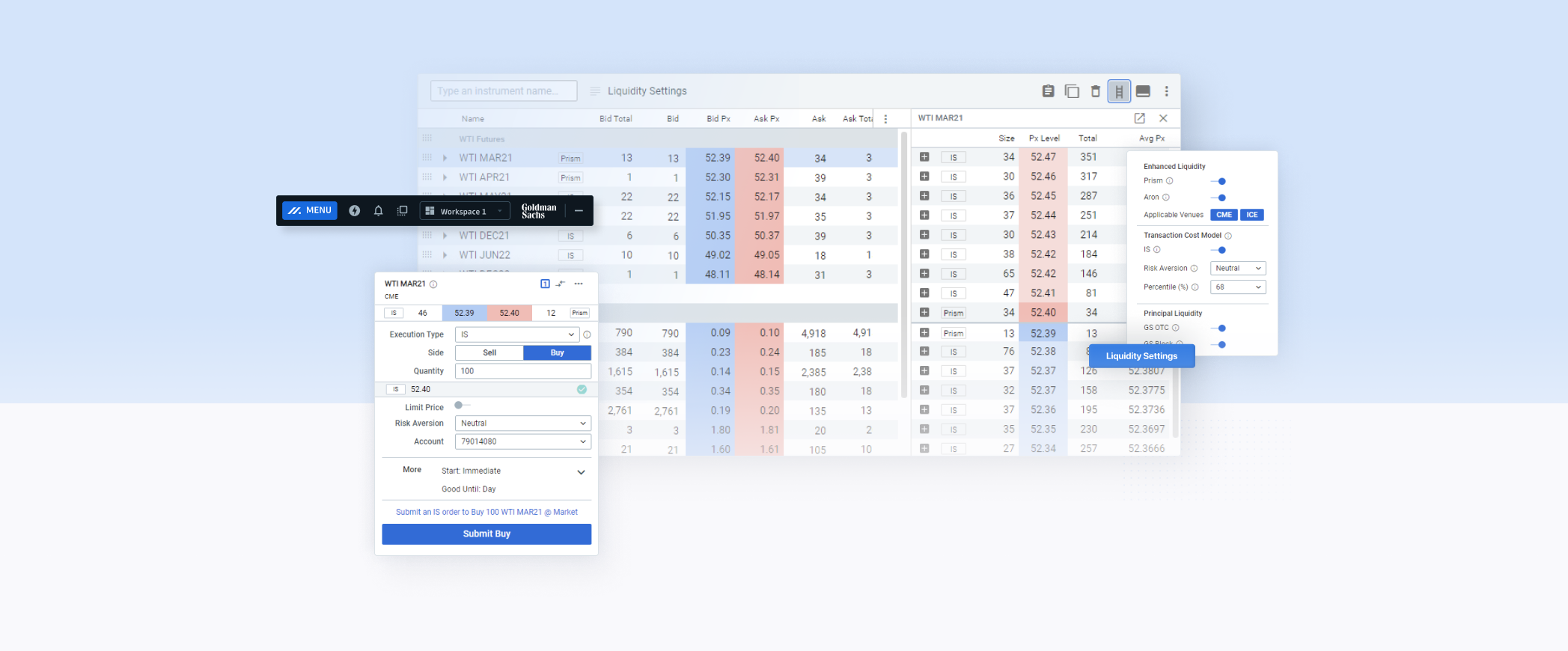
The commodity industry is unique. The providers are not only private banks but also exchanges. Every bank and exchange has their own platforms to display their liquidities.In order to be a centralized price center, I looked into different organization data publication systems. The exchanges such as CME and ICE have public API we are able to plug in. Private bank pricing is not publicly accessible, nor easy to negotiate with. We decided to work with exchanges as the first step. As a result, users can use Goldman Sachs' platform to access exchange and GS pricing all together.
What if show prices in right sequence?
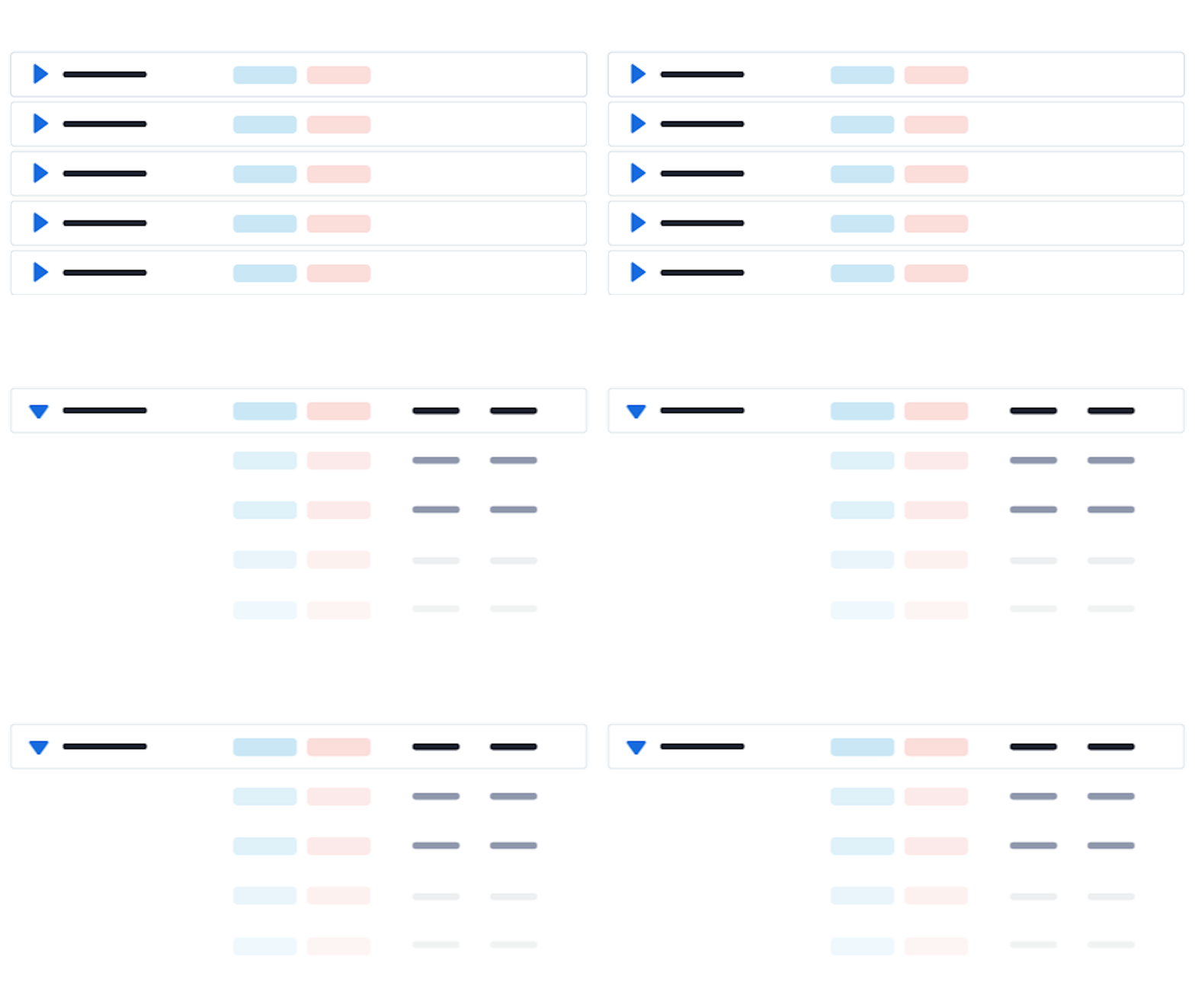
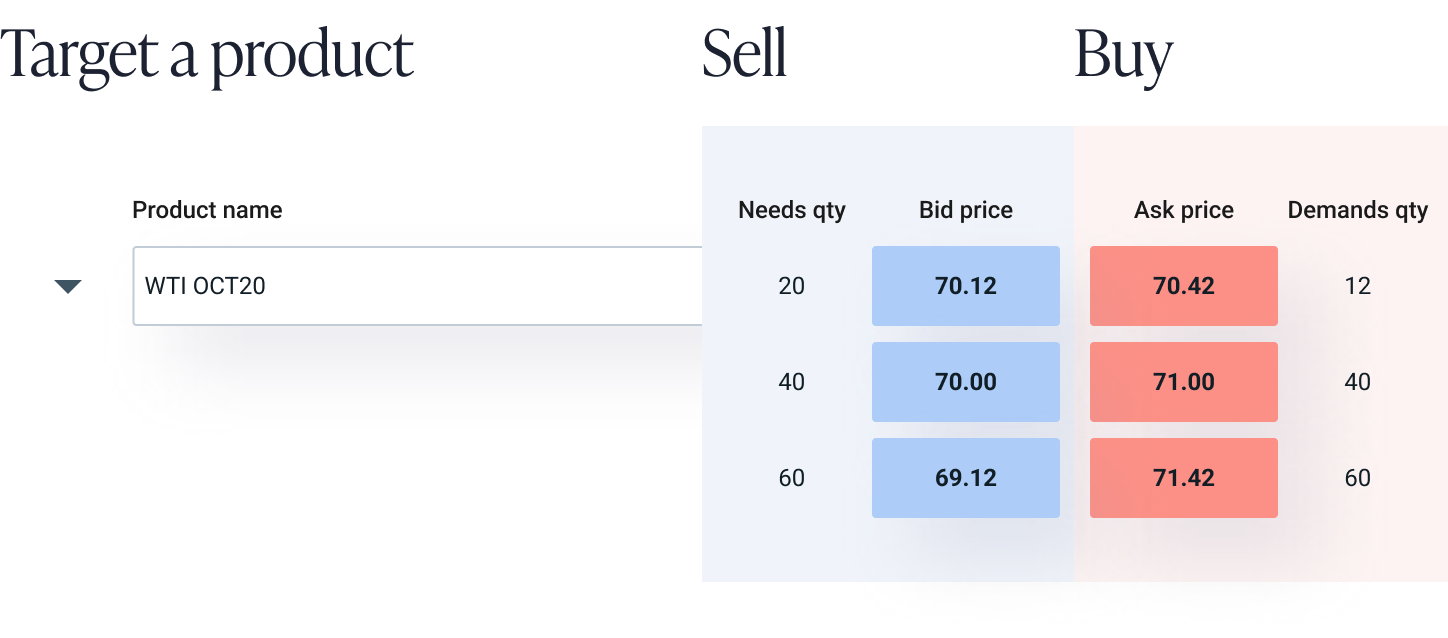
Users are monitoring 50+ products at once, so they prefer to look at the best price by default. Users also dive into one product to understand pricing depth. Having the price force ranked seems like a straightforward solution.
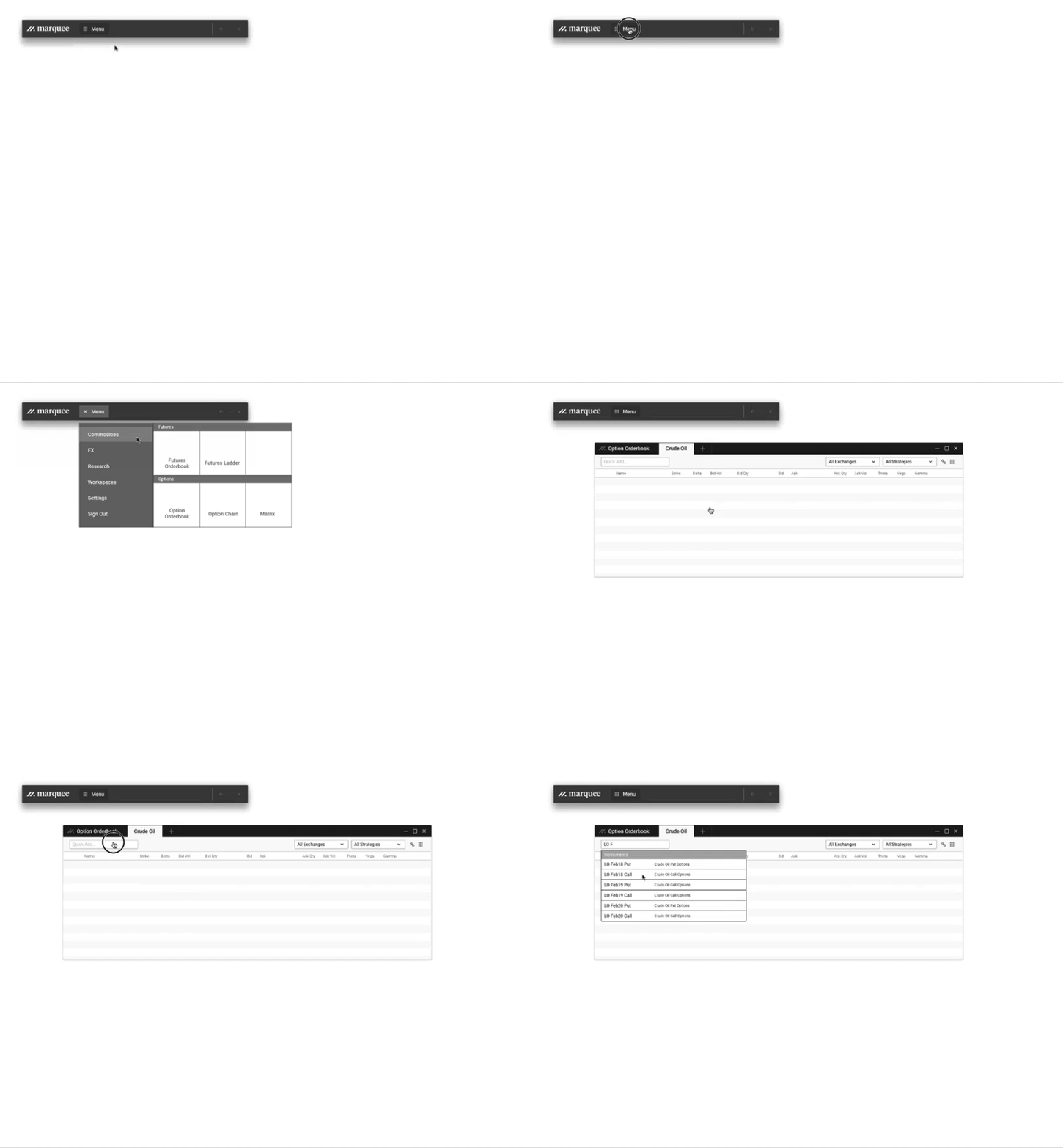
Low-fi prototype
Challenge - naming convention
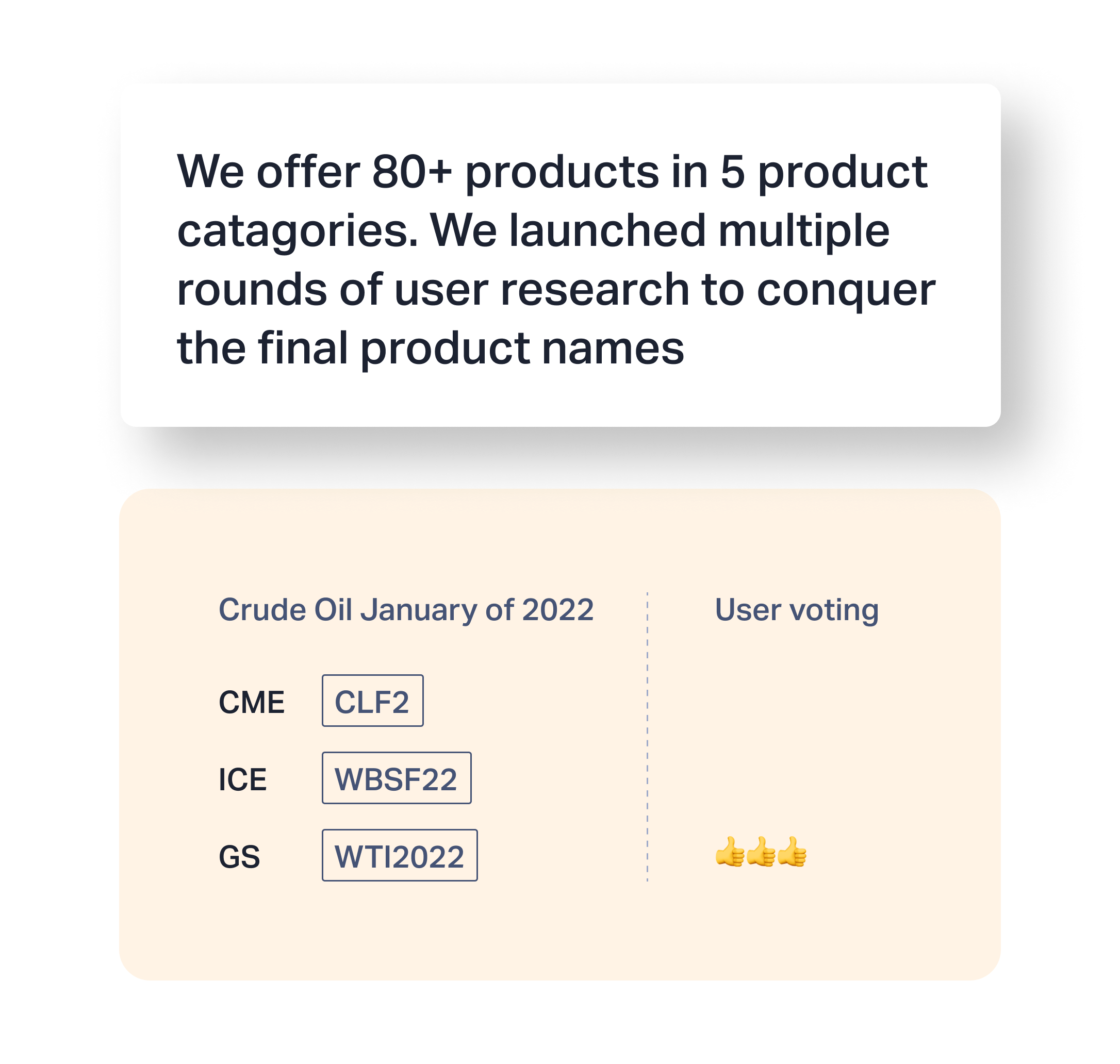
No standard product names among different organizations
To move forward with the force ranking idea in the institutional finance world, the naming convention became a challenge - different organizations refer to the same product using different acronyms. Users have to learn all the acronyms in order to trade.
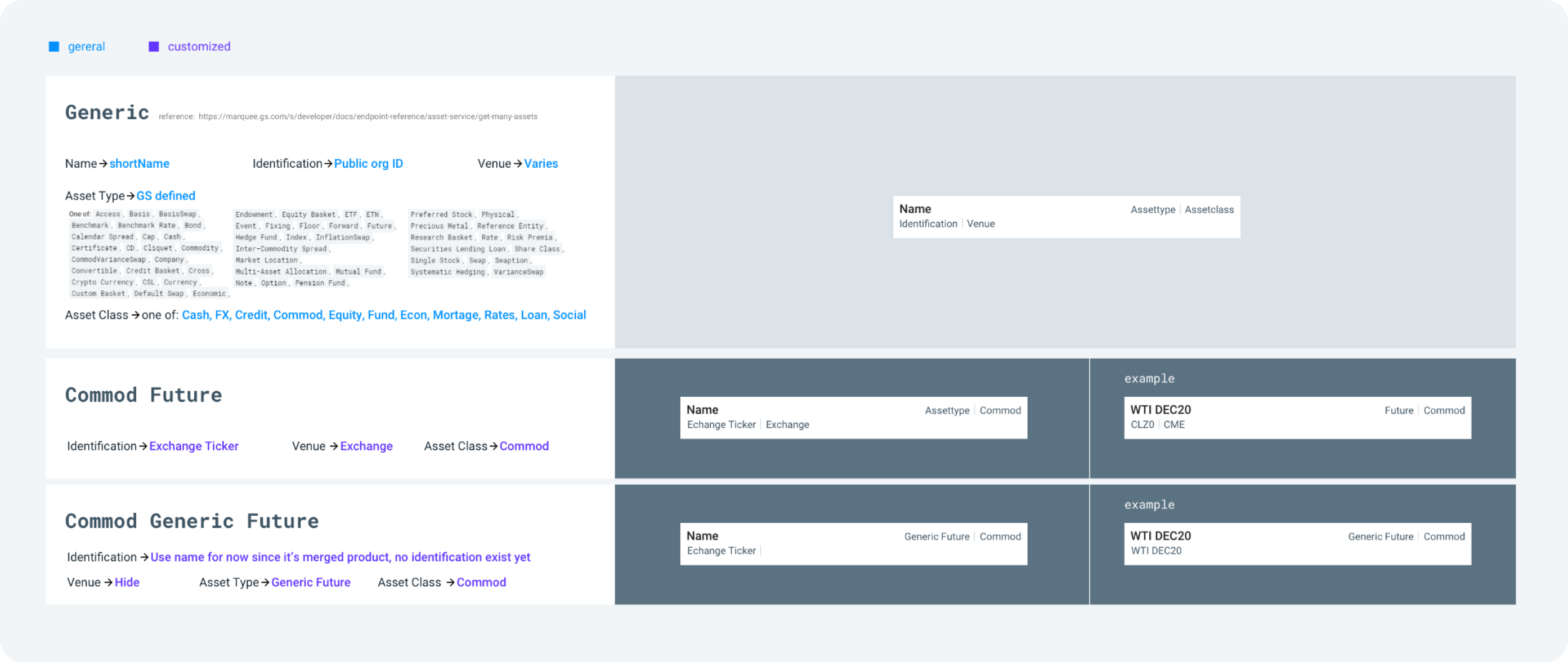
Adding to the complexity, the commodity product is in the futures market, meaning users are dealing with future month's products. So, the product name does not only include a single product id but also a contract indicating the deliver month of the product. Some organizations come up with more acronyms for each month. So, providing an intuitive naming convention is important in order to move to the next step.
Information mapping
Create holistic strategies to fulfill user needs
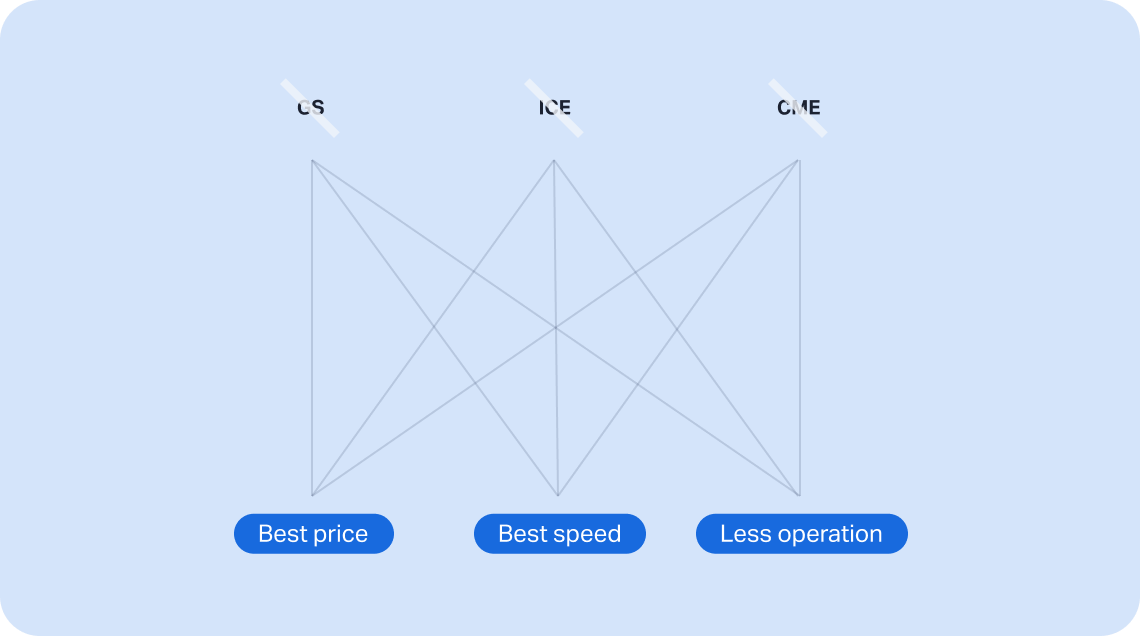
Following the overall direction of creating a pricing center, I was advocating for de-branding all the liquidities. Instead, we can create different strategies based on users' trading needs, such as best speed, prices, etc.
• Decentralize organizational brands • Merge all the liquidities • Create strategies based on user’s needs
Compromises
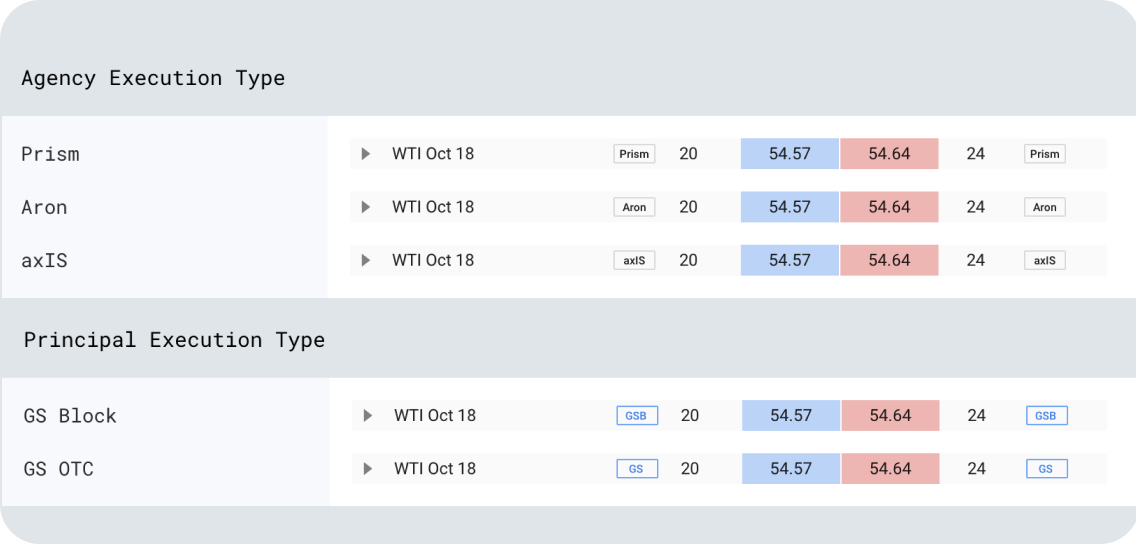
When users trade exchange products, Goldman Sachs is playing an agency role. But when users trade Goldman Sachs' liquidities, Goldman Sachs is acting in a principal role. Even though these two workflows are the same from users' perspective, the clearance process is very different.
Because of the market restriction and GS compliance rules, we are not able to merge GS liquidity into the strategy solution. However, this compromise was not a blocker to develop a portal that contains exchange and GS liquidities.
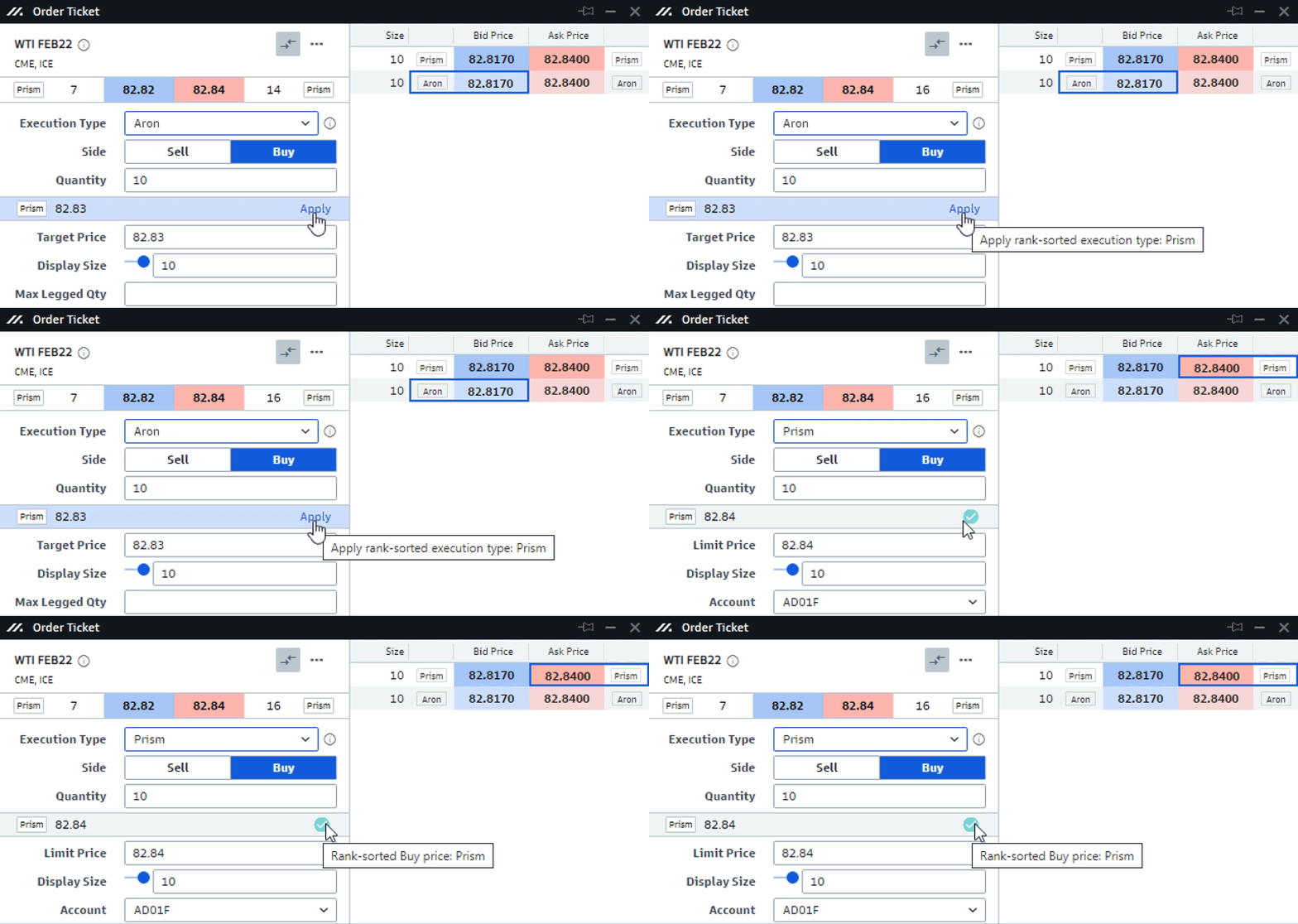
Execution types mapping
Exploration and testing
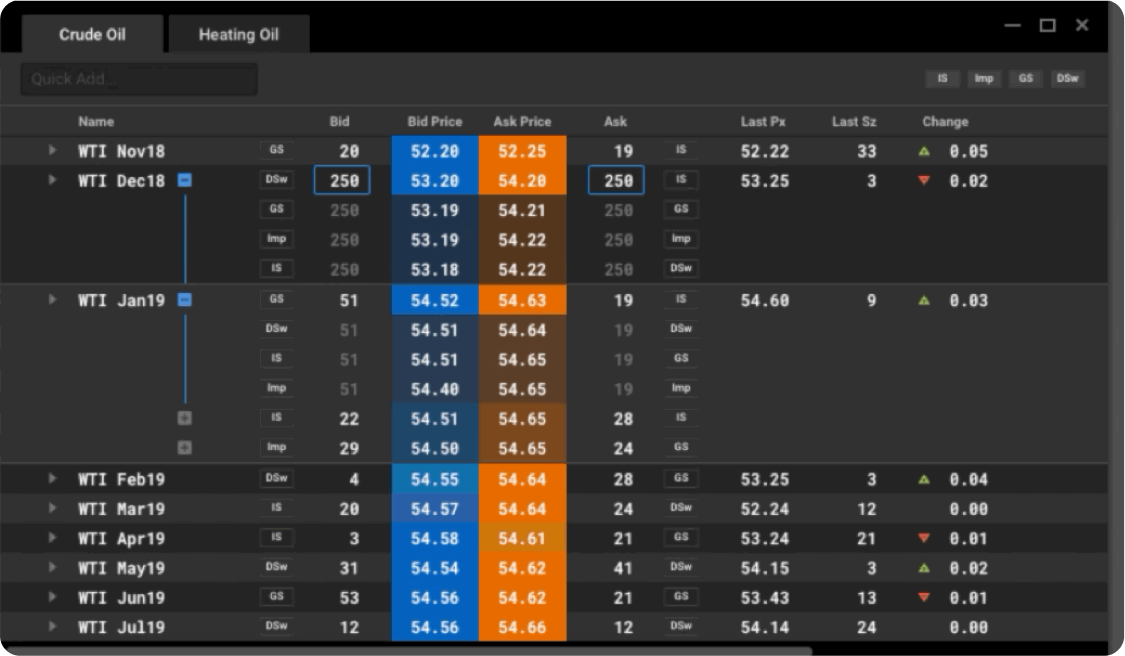
The strategies conceptually makes sense. I prototyped the idea and tested with user. I received some valuable synthesis.
Low-fi prototype
Dark theme
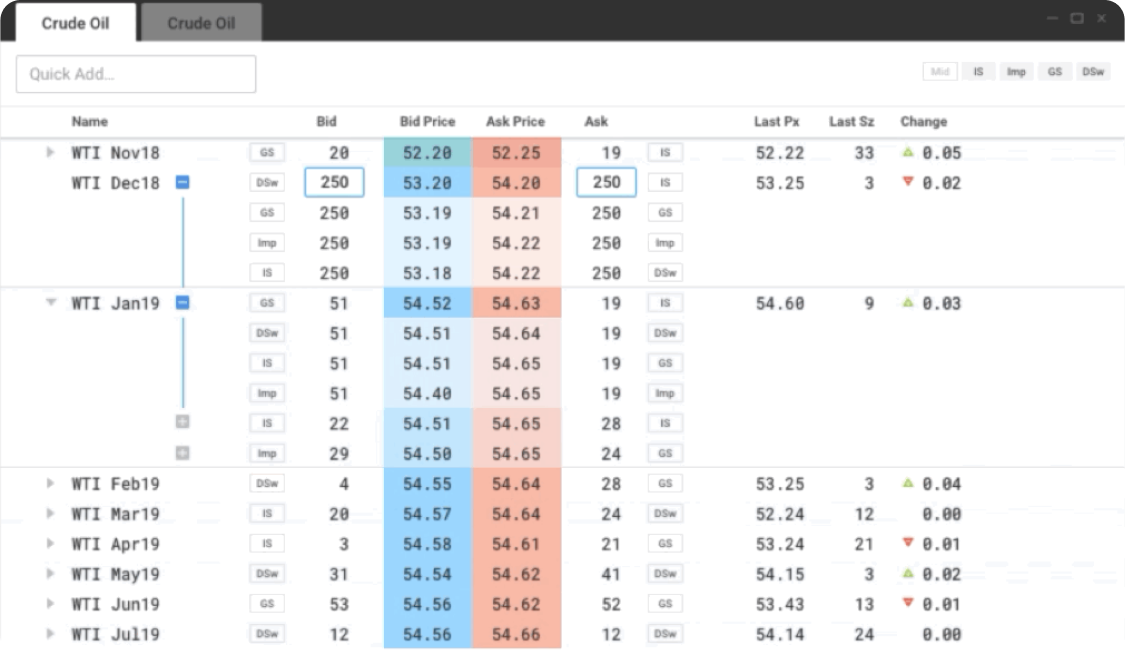
Light theme - selected
Testing and synthesis
I tested with 30 traders with the goal to set up the design direction and functionality needs. Additionally, I run an A/B test on the color theme. There were top findings that I continued iterating on:
01
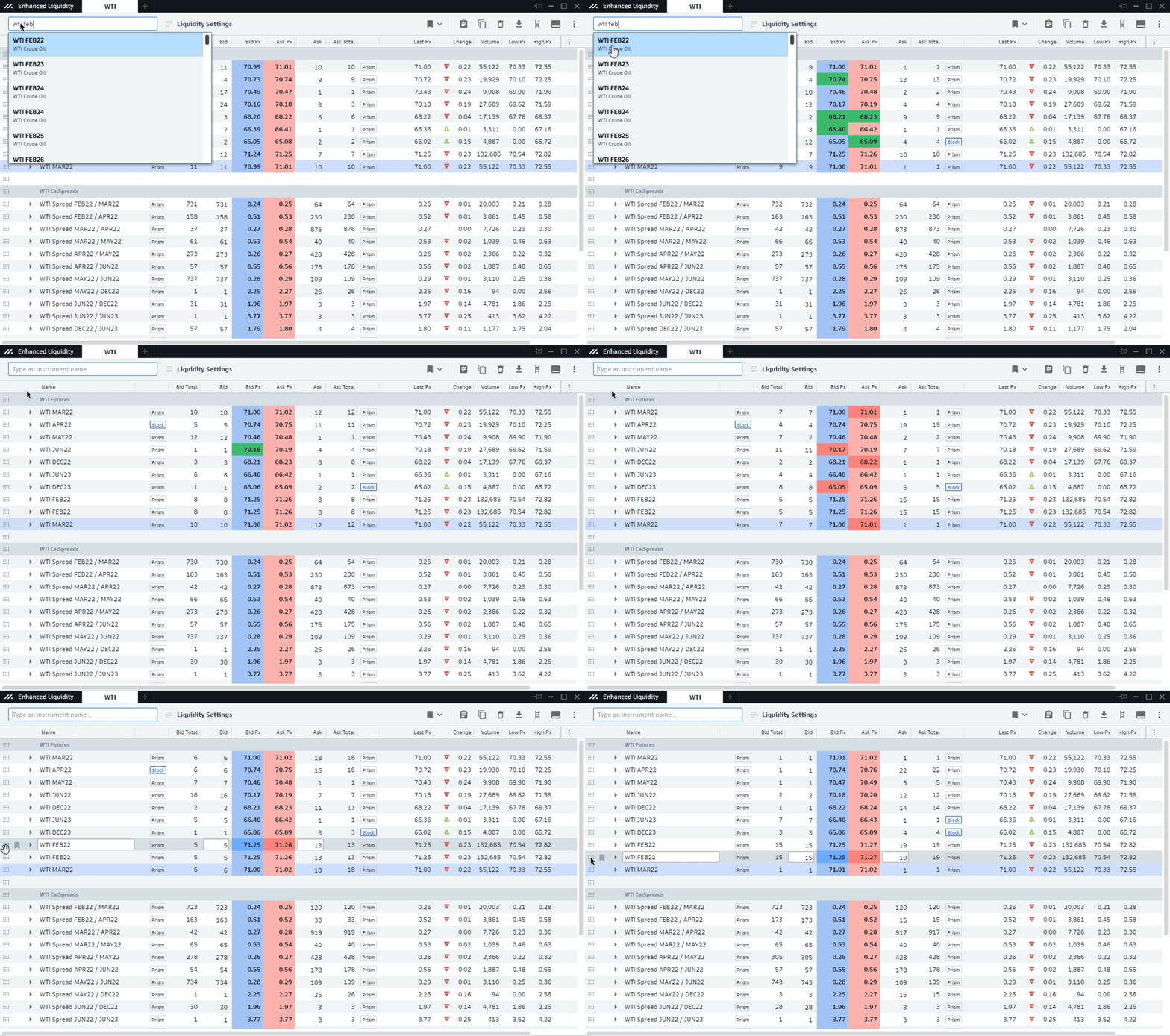
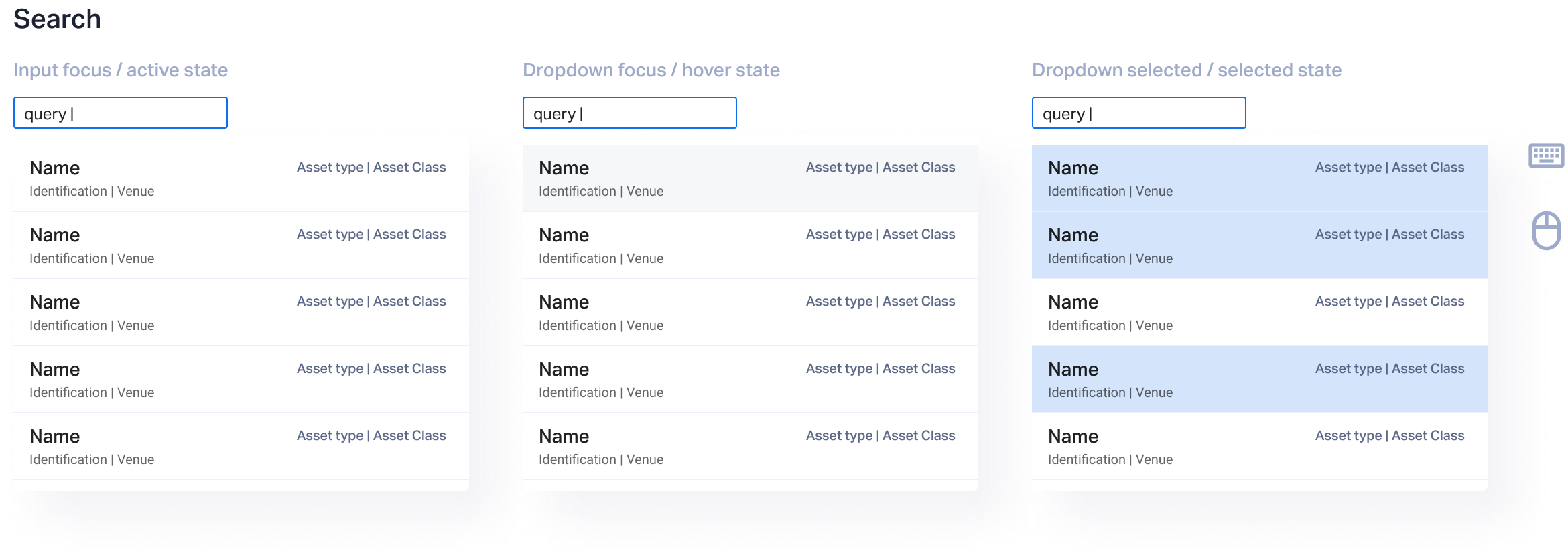
Traders want a smart, intuitive search that not only understands specific keyword syntaxes regarding products, but adds them to their grid
02
Traders want more pricing and market data to ensure they have the best price and strategy before submitting an order
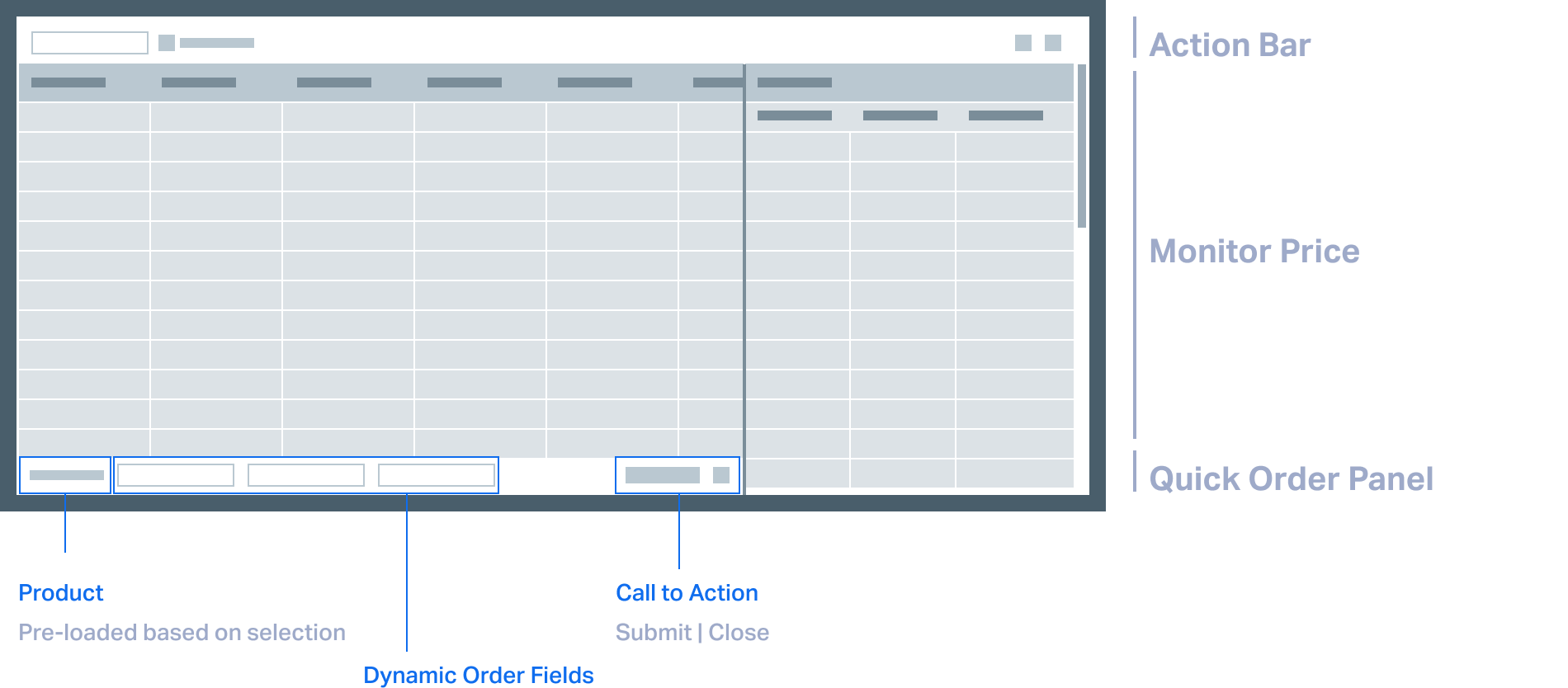
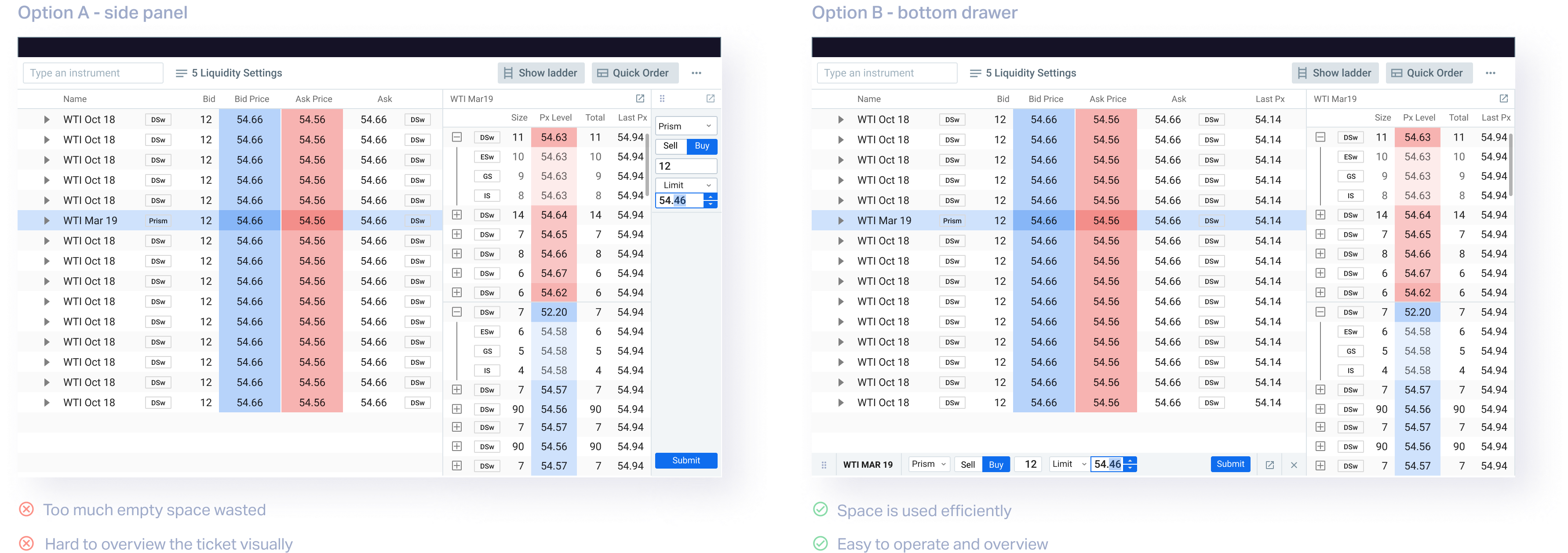
Traders want an quick and easy way to submit order
05
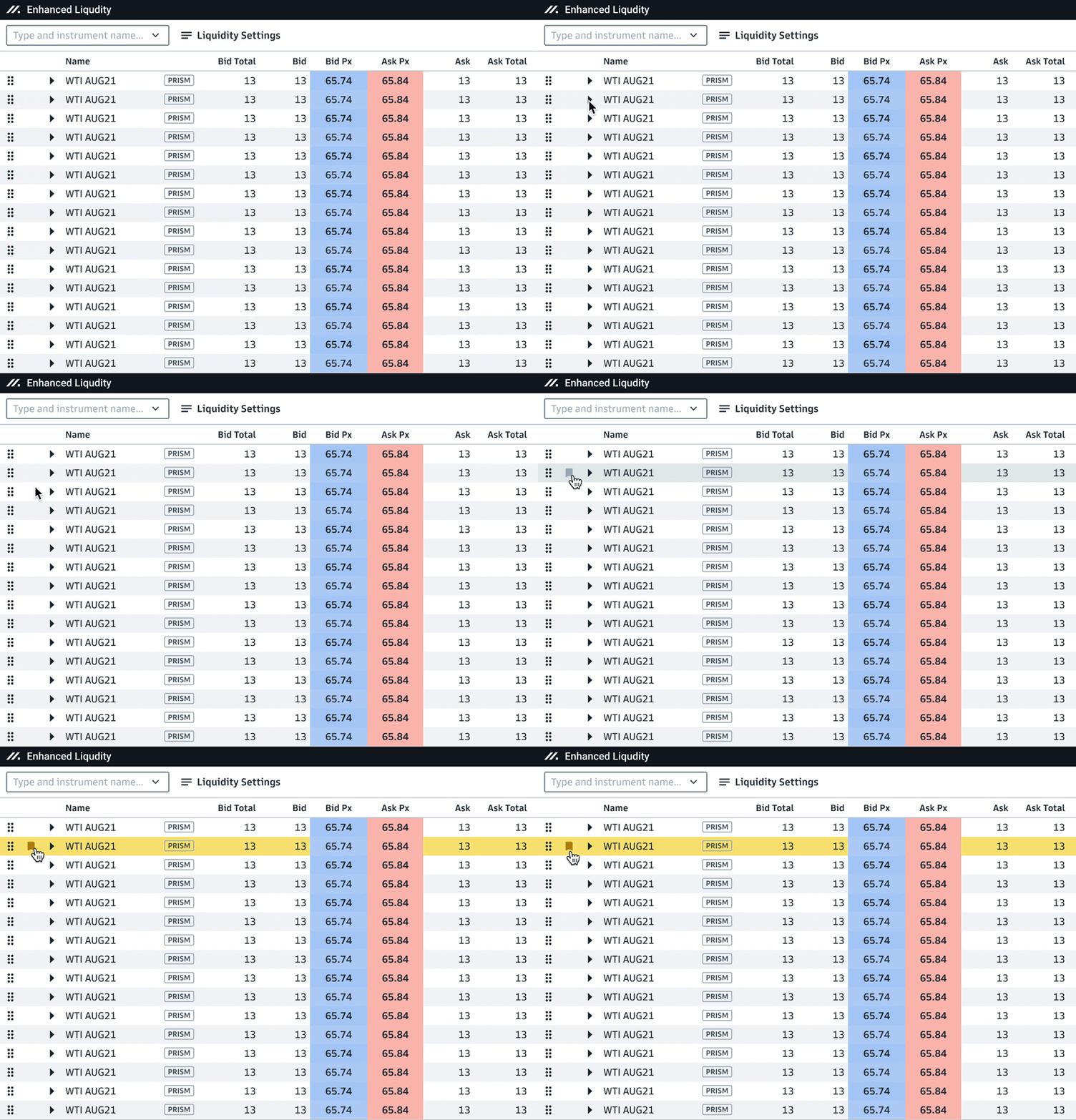
Traders need to highlight the products they are focused on
Prioritization and iteration
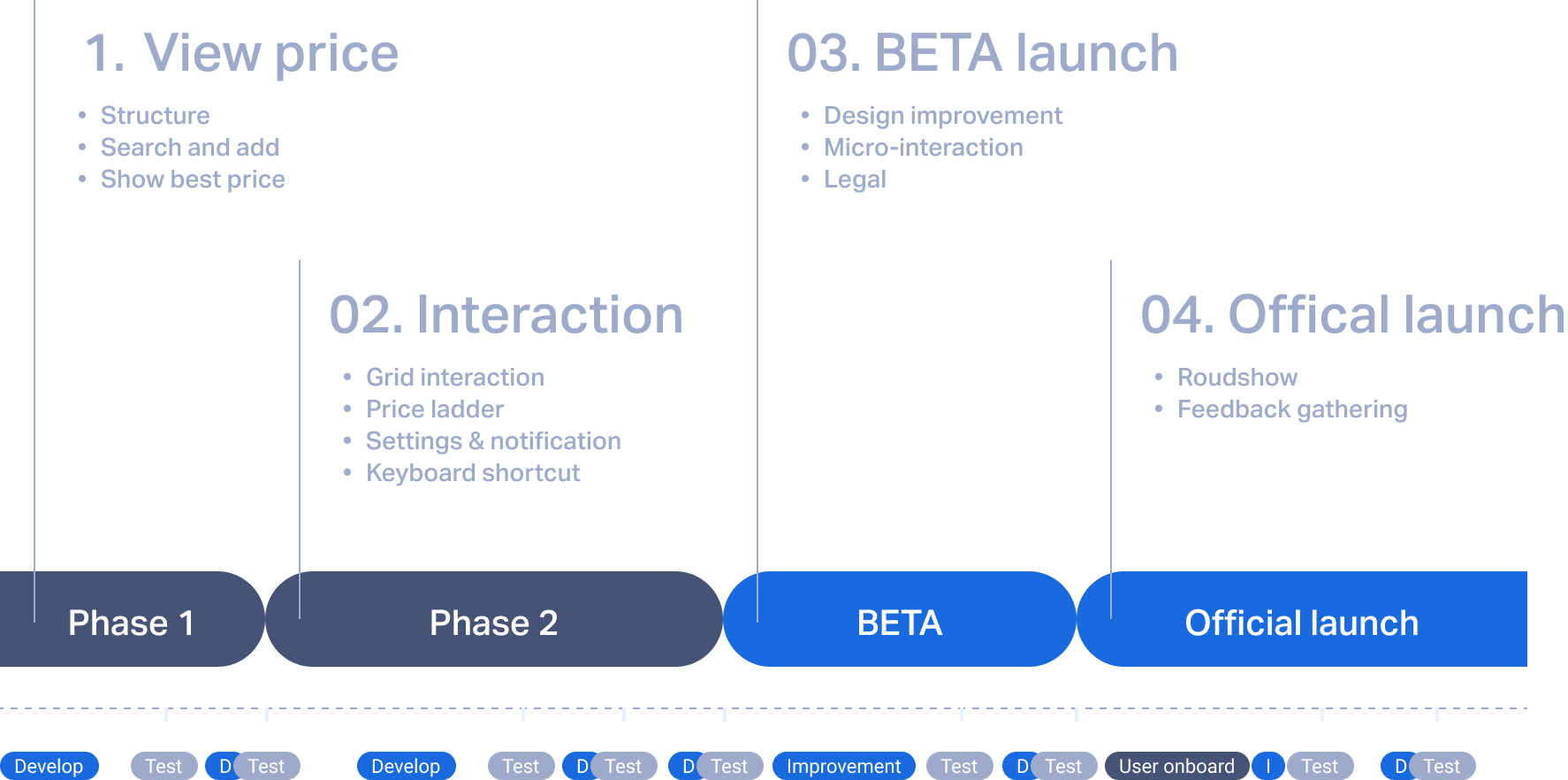
While I was iterating on the features, the fundamental direction was ready for engineers to start their backend build and front end preparation. Here was how I worked with PM and engineers to prioritize our development:
During and post development, I kept testing the features and the production environment with traders.
Impact
100+
New institutional users onboarded
600
+ 20%
Commodity monthly active users
45%
Revenue growth
Design library 1.0
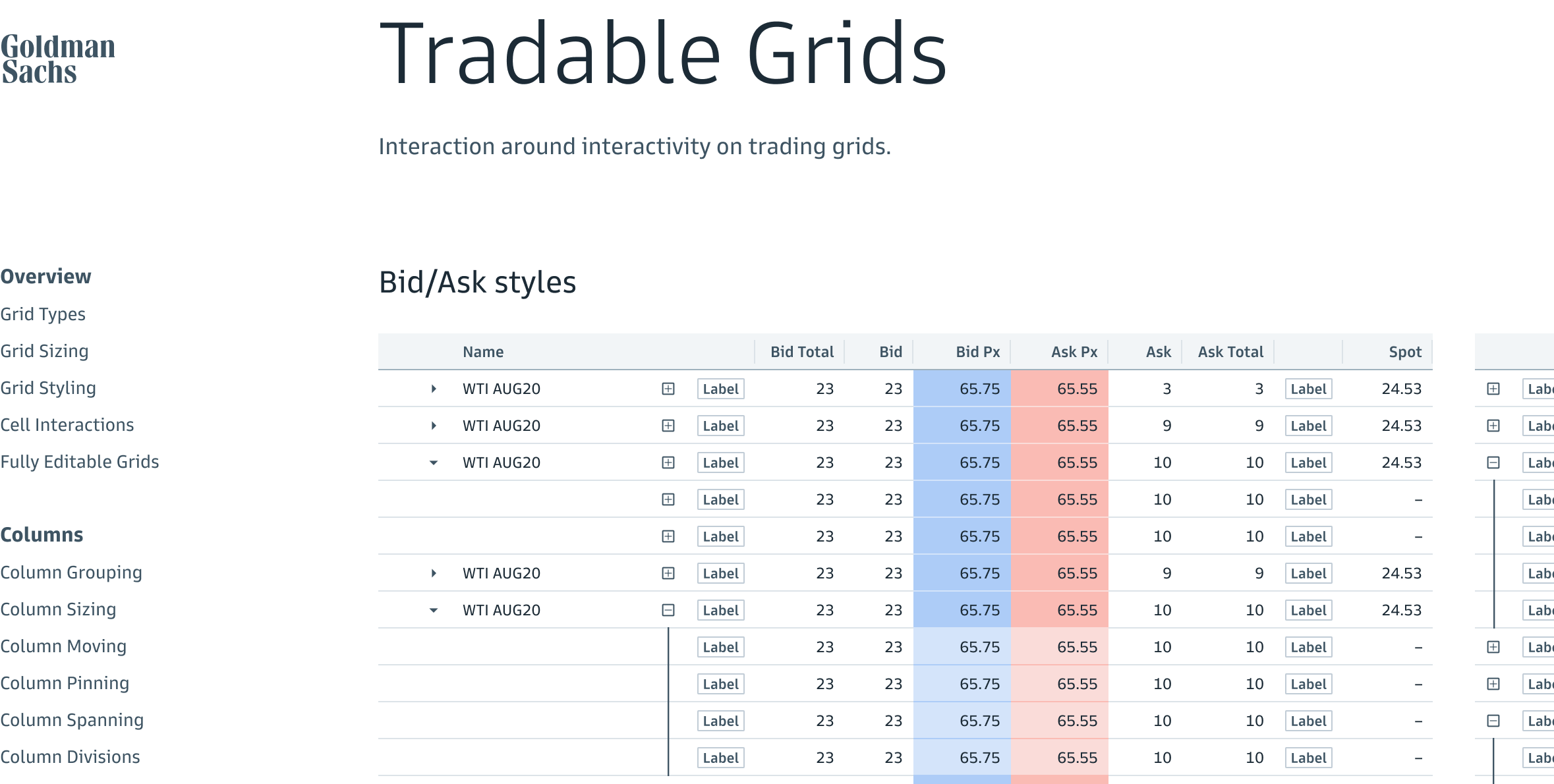
Launched first version of GS design library. The library would enhance our future design productivity and kept the system consistent.
Summary
Challenge the old way, enjoy the deconstruct - reconstruct process, and take direction from the users’ needs